



What if one simple move could strengthen your core, without straining your back?
A strong core is not just about appearance, it is the foundation of movement, balance, and injury prevention. Many people focus on crunches or sit-ups but overlook exercises that actually protect the spine and improve coordination.
The dead bug exercise is one of the most effective ways to train your core safely while building stability and control. It is widely used in modern fitness programs and physical therapy because it strengthens deep muscles without putting stress on your lower back.
What Is a Dead Bug Exercise?
The dead bug exercise is a core stability movement used to improve coordination, balance, and spinal control. It involves lying on your back while moving opposite arms and legs in a controlled pattern, keeping your core engaged and your lower back pressed into the floor.
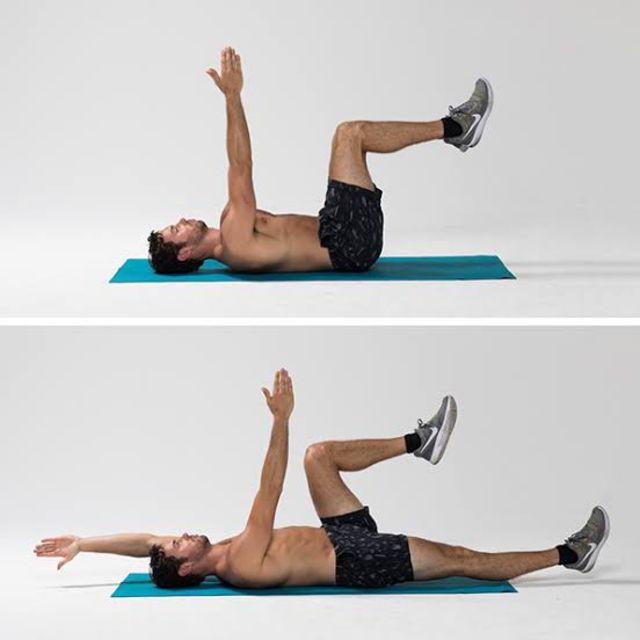
Source: Skimble
In modern fitness, it is classified as an anti-extension core exercise, meaning it trains your core to resist arching in the lower back. This is extremely important for protecting your spine during daily activities and workouts.
Unlike traditional abs exercises, it focuses more on control, coordination, and stability, making it highly effective for long-term strength.
Understanding the Role of Core Stability
Before getting into technique, it is important to know why this exercise is so effective.
Core stability is not just about muscles, it is about how your body controls movement. In 2026 fitness training, the focus has shifted toward functional strength, where the goal is to train muscles to work together.
The dead bug exercise helps your body learn how to:
- Keep the spine stable
- Control limb movement
- Maintain balance under tension
This aligns with the 2026 ACSM (American College of Sports Medicine) Resistance Training Guidelines, which prioritize “anti-extension” and functional stability. This is why it is commonly used in both athletic training and physical therapy.
Features of the Dead Bug Movement
Before learning how to perform it, it is important to understand what makes this exercise unique. It is not just another core workout but a movement focused on control and stability.
These features make it highly effective for both beginners and advanced users.
Controlled Movement
This exercise is not about speed or rushing through repetitions. Slow and controlled motion keeps your core muscles fully engaged throughout. This also improves coordination and strengthens your mind-muscle connection.
Low-Impact
This movement places very little stress on your joints and spine. Because of this, it is ideal for beginners and people recovering from injuries. It allows you to build strength safely without unnecessary strain.
Focus on Stability
The goal is not just to build visible muscles but to improve stability. It trains your body to stay balanced while your limbs are moving. This helps you perform daily activities and workouts more efficiently.
How to Do the Dead Bug Exercise Correctly
Follow these steps to perform it with proper form:
Starting Position
- Lie Down: Flat on your back on a mat
- Arms: Extend straight up toward the ceiling
- Legs: Bend knees at 90 degrees
Movement Execution
- Lower Opposite Limbs: Slowly extend one arm and the opposite leg
- Keep Core Tight: Do not let your lower back lift off the floor
- Return to Start: Bring limbs back to starting position
- Repeat: Alternate sides
Important Tips
- Keep Back Flat: Maintain a neutral spine and brace your core to prevent arching.
- Move Slowly: Control is more important than speed
- Breathe Properly: Exhale as you extend limbs
Who Should Do This Exercise?
This movement is suitable for almost everyone.
Beginners: It is simple and safe for beginners, making it perfect for those just starting fitness.
Athletes: Helps improve performance by strengthening stabilizing muscles.
People with back pain: Often recommended in rehabilitation programs due to its low-impact nature.
Common Mistakes to Avoid
Even though it looks simple, many people perform it incorrectly.
- Arching the Lower Back: This reduces effectiveness and can lead to injury. Always keep your spine neutral.
- Moving Too Fast: Rushing the movement removes the core engagement and defeats the purpose.
- Lack of Control: Dropping arms and legs quickly instead of controlled movement reduces benefits.
Variations of the Exercise
Start with the variation that matches your current strength and control level.
Beginner Version
- If you are new, keep one leg on the ground while moving the other. This reduces difficulty and helps you learn proper control.
Advanced Version
- Add resistance bands or hold light weights to increase intensity. This makes the exercise more challenging and improves strength further.
Stability Ball Version
- Place a ball between your hands and knees and press into it while moving. This increases core activation and balance.
When to Add It to Your Workout
Timing matters when including this movement in your routine.
- Warm-Up: It prepares your core for heavier exercises.
- Core Workout: It can be included as part of a dedicated core routine.
- Cool Down: Helps reinforce proper movement patterns after training.
Sample Routine
Here is a simple routine you can follow:
- Exercise 1: exercise – 3 sets of 10 reps
- Exercise 2: Plank – 3 sets of 30 seconds
- Exercise 3: Glute bridge – 3 sets of 12 reps
This combination targets the entire core effectively. You can also combine other exercises so it becomes a full combo workout.
Benefits of Dead Bug Exercise
This exercise helps strengthen your core, improve stability, and support better posture in daily life. It also enhances coordination while reducing the risk of injuries, especially in the lower back.
Builds Deep Core Strength
This movement targets deep muscles like the transverse abdominis, which support your spine and act like a natural brace.
Strengthening these muscles improves stability and overall control during movement. It also helps reduce the risk of injuries in both workouts and daily activities.
Improves Coordination and Brain-Muscle Connection
Since you move opposite arms and legs, your brain must coordinate each motion carefully. This improves your mind-muscle connection and overall body awareness. As a result, your movements become smoother, more controlled, and efficient.
Supports Better Posture
Weak core muscles are one of the main reasons behind poor posture. This exercise helps align your spine by strengthening the muscles that support proper positioning. Over time, it improves how you sit, stand, and carry your body.
Reduces Lower Back Pain
This exercise focuses on maintaining spinal stability during controlled movement. It reduces unnecessary pressure on the lower back and improves movement patterns. This makes it highly effective for relieving discomfort and preventing future pain.
Enhances Athletic Performance
Athletes benefit from improved balance, coordination, and core stability. This exercise helps transfer strength efficiently between the upper and lower body. As a result, it supports better performance in sports and physical activities.
The Closing Sentences About dead Bug Exercise
Core strength is not just about appearance, it is about stability, control, and long-term health. This movement stands out because it trains your body to move efficiently while protecting your spine.
By focusing on slow, controlled motion and proper technique, you can improve posture, reduce injury risk, and build a stronger foundation for all physical activities.
People Also Ask For
You can perform it 3 to 4 times per week as part of your core routine. Consistency is more important than intensity for long-term results.
Yes, it is one of the best beginner-friendly core exercises because it is low-impact and easy to learn.
Yes, it strengthens the muscles that support your spine, which can reduce lower back discomfort over time.
Start with 8 to 10 reps per side and gradually increase as your strength improves.
No, it is a bodyweight exercise and can be done anywhere without any equipment.
