



Grip strength isn’t just for climbers or powerlifters. It’s a foundational skill that supports everything from carrying groceries to deadlifting heavy weights. Crushing grip strength is one of the most practical and measurable aspects of hand strength development.
Whether you’re a climber, lifter, martial artist, or just someone who wants a stronger handshake, building crushing grip strength is a game-changer.
In this blog post, I will share a comprehensive training guide for building crushing grip strength for real and lasting power.
Understanding Crushing Grip Mechanics
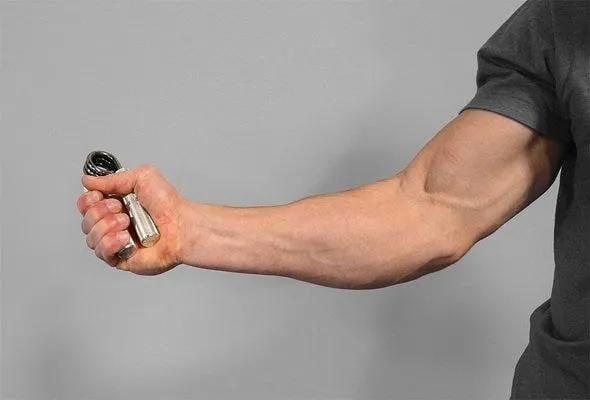
Crushing grip is the strength generated when squeezing an object between your palm and fingers, with your thumb providing opposing force. This differs from pinch grip, where the thumb opposes the fingers, or support grip, which involves simply maintaining holds over extended periods.
It’s powered by the flexor muscles in your forearm and fingers, and it plays a vital role in performance, injury prevention, and even daily tasks. According to strength coaches and physiotherapists, crushing grip strength is one of the most overlooked yet essential components of upper-body power. It supports wrist stability, improves lifting mechanics, and enhances neuromuscular coordination.
Progressive Training Methodology for Building Crushing Grip
Establishing Your Baseline
Before creating a training program, assess current crushing capacity honestly. Hand grippers rated by resistance level provide a standardized measurement. Can you close a 100-pound gripper? 150 pounds? 200 pounds? Understanding your starting point enables intelligent progression, targeting actual limitations rather than arbitrary training protocols.
Most untrained men begin with a closing force of somewhere between 80 and 140 pounds, whilst women typically start with a closing force of between 50 and 100 pounds. However, individual variation is substantial based on genetics, occupational hand use, and previous training history. Select a gripper that you can close for 5-8 repetitions with focused effort, as this will represent your working weight for initial training blocks.
Structured Progression Protocols
Systematic progression forms the foundation of strength development. Begin with 3-4 sets of 5-8 repetitions per hand using your working weight gripper, performed 2-3 times weekly. Focus on complete closures where the handles fully touch rather than partial squeezes that don’t develop full-range strength.
As you achieve 10+ clean repetitions, progress to the next resistance level. Quality grippers like heavy grips offer calibrated resistance progressions that provide clear benchmarks, allowing you to track advancement systematically. This measurable progression maintains motivation whilst ensuring adequate training stimulus.
Advanced Training Techniques
Once you’ve established a solid foundation through straightforward repetition work, advanced techniques can accelerate further gains. Eccentric training, which involves using both hands to close the gripper and then slowly resisting opening with one hand, develops tremendous strength with lighter implements. This method proves particularly effective for breaking through plateaus.
Isometric holds involve closing the gripper fully and maintaining that position for extended periods. Hold times of 10-30 seconds build strength-endurance, bridging the gap between maximum strength and practical application. These holds develop mental toughness alongside physical capacity, teaching you to maintain effort despite discomfort.
Negatives represent another valuable technique. Close the gripper with both hands, then slowly lower through the range of motion with one hand over 5-10 seconds. This eccentric-focused approach generates high training stimulus whilst managing fatigue, allowing quality work even when muscles are too fatigued for positive repetitions.
Complementary Training Approaches
Thick Bar Work
Increasing barbell diameter dramatically intensifies grip demands during standard exercises. Fat Gripz attachments or naturally thick implements transform regular rows, curls, and deadlifts into formidable grip challenges. This approach builds functional strength that transfers broadly whilst training multiple muscle groups simultaneously.
The key advantage lies in developing crushing endurance, the ability to maintain grip over extended sets rather than brief maximum efforts. This capacity proves invaluable for athletes whose sports require sustained gripping, from rowing to racquet sports.
Dynamic Grip Training
Whilst hand grippers provide consistent resistance, variable resistance tools create different force curves throughout the range of motion. Devices with springs, bands, or rotating handles engage stabilizing muscles whilst building primary crushing strength. This variation prevents adaptation and develops grip capacity that transfers more completely to unpredictable real-world demands.
Wrist and Forearm Strengthening
Crushing grip doesn’t exist in isolation; strong wrists and developed forearms provide the foundation for maximum hand strength. Wrist curls, reverse wrist curls, and wrist rolling exercises build supporting musculature that enables your hands to express their full strength potential. Neglecting these supporting areas creates imbalances, limiting overall crushing capacity.
Avoiding Common Training Mistakes
Excessive Volume
The most frequent error involves excessive training volume driven by enthusiasm rather than recovery capacity. Whilst forearm muscles tolerate relatively high frequencies, crushing grip training stresses finger tendons and connective tissues, requiring substantial recovery time. Starting with 2-3 weekly sessions allows adaptation whilst preventing overuse injuries.
Monitor for warning signs, including persistent hand soreness lasting multiple days, difficulty achieving full finger extension, or declining performance despite consistent effort. These symptoms indicate training has exceeded recovery capacity, warranting reduced volume or additional rest days.
Neglecting Extensor Work
Training exclusively focuses on crushing strength whilst ignoring finger extensors creates muscular imbalances contributing to elbow pain and forearm tightness. Dedicate 20-30% of grip training volume to extensor work using rubber bands or specialized extension trainers. This balanced approach maintains joint health whilst optimizing long-term strength development.
Improper Technique
Using momentum, incomplete closures, or inconsistent hand positioning reduces training effectiveness whilst increasing injury risk. Each repetition should demonstrate controlled movement, a complete range of motion, and consistent form. Quality repetitions build strength more effectively than higher volumes performed sloppily.
Tracking Progress and Setting Goals
Measurable objectives maintain motivation and ensure progressive overload. Closing specific gripper resistance levels provides concrete benchmarks; progressing from a 150-pound to a 200-pound gripper represents quantifiable achievement. Many grip strength enthusiasts pursue certifications from various organizations, closing officially rated grippers under standardized conditions.
Document training sessions, including gripper resistances, repetitions achieved, and subjective effort levels. This data reveals patterns, identifies effective training approaches, and highlights when adjustments are necessary. Consistent progress indicates appropriate programming, whilst stagnation suggests modifications are needed.
Conclusion
Building crushing grip strength requires systematic training, progressive overload, and patience. To build strong hands, first learn how they move and work.
Follow a clear step-by-step training plan, add exercises that support and balance your grip work, and avoid common errors like doing too much too soon. Keep track of your progress with simple goals. This will help you gain powerful hand strength that boosts your sports skills and everyday abilities.
